
[ Industry case study — CRM Integrations ]
Lifted Property Vista's email engagement 230% after joining up HubSpot and Salesforce
Property Vista, whose Vida product provides AI-driven leasing software for multifamily real estate, was running HubSpot and Salesforce in total isolation while its marketing director operated as a one-person department. RevBlack fixed the email infrastructure, bridged the two platforms, fed lead data into custom Salesforce dashboards and replaced manual lead chasing with automated, A/B-tested outbound.
Original project by RevBlack ↗Industry reference — not a NexSum Labs engagement.
- Client
- Property Vista
- Industry
- Multifamily real estate / PropTech leasing software
- Services
- HubSpot-Salesforce integration, Email infrastructure repair, Marketing automation, A/B testing & ICP segmentation, Salesforce dashboards
- Year
- 2026
- Timeline
- Two months

The client
Property Vista's marketing and sales operations had fallen into what the case study calls survival mode, with HubSpot and Salesforce operating in complete isolation and no visibility into marketing engagement. The legacy setup offered no website analytics or tracking, and CRM data was too disordered to identify high-value targets, while earlier consultants had lacked the strategic vision to bridge the gaps. RevBlack first stabilised the foundation by repairing the email infrastructure and connecting HubSpot and Salesforce, then built a marketing database and automated workflows around A/B-tested, ICP-specific content.
The challenge
HubSpot and Salesforce sat in total isolation, which meant Property Vista's marketing director had no visibility into marketing engagement and could not prioritise sales activity. The legacy setup provided no website analytics or tracking, and the CRM data was in such disarray that identifying high-value targets was impossible. Previous consultants had failed to bridge these gaps, leaving the team trapped in a cycle of manual troubleshooting rather than higher-level strategy.
The solution
01Stabilise the foundation
RevBlack fixed the email infrastructure and bridged the gap between HubSpot and Salesforce, letting lead data flow into the sales team's existing pipeline instead of being trapped in one system.
02Unify the plumbing into Salesforce
The unified integration let lead data flow seamlessly into custom Salesforce dashboards, giving the sales team the visibility into warm leads and content consumption it had lacked for years.
03Replace manual lead chasing
A robust marketing database and automated workflows were built to move the team away from manual lead chasing and toward a repeatable, self-running outbound engine.
04Segment and test content
Generic bulk sends were replaced with A/B-tested content tailored to specific ideal customer profiles, turning the marketing director's creative strategies into a scalable outbound motion.
The results
Within two months, email engagement rose 230% overall, with click-through rate climbing from a 1.5% baseline to a 5.05% peak. Click-through rate lifted 121% in the first month through corrected deliverability, and sales now operates with full visibility into warm leads and content consumption. The marketing director moved from managing disordered data to high-level strategy, with a repeatable system in place for future scale.
“RevBlack has the technical expertise to execute, but they also have the EQ to empathize with what you're dealing with. I've worked with people who are just technical and not fun to work with and people who are nice but don't know how to do it. RevBlack feels like both.”
Tools & stack
Original project by RevBlack ↗ — published by the delivering agency, included here as an industry reference.
[ More industry examples ]
More from crm integrations.
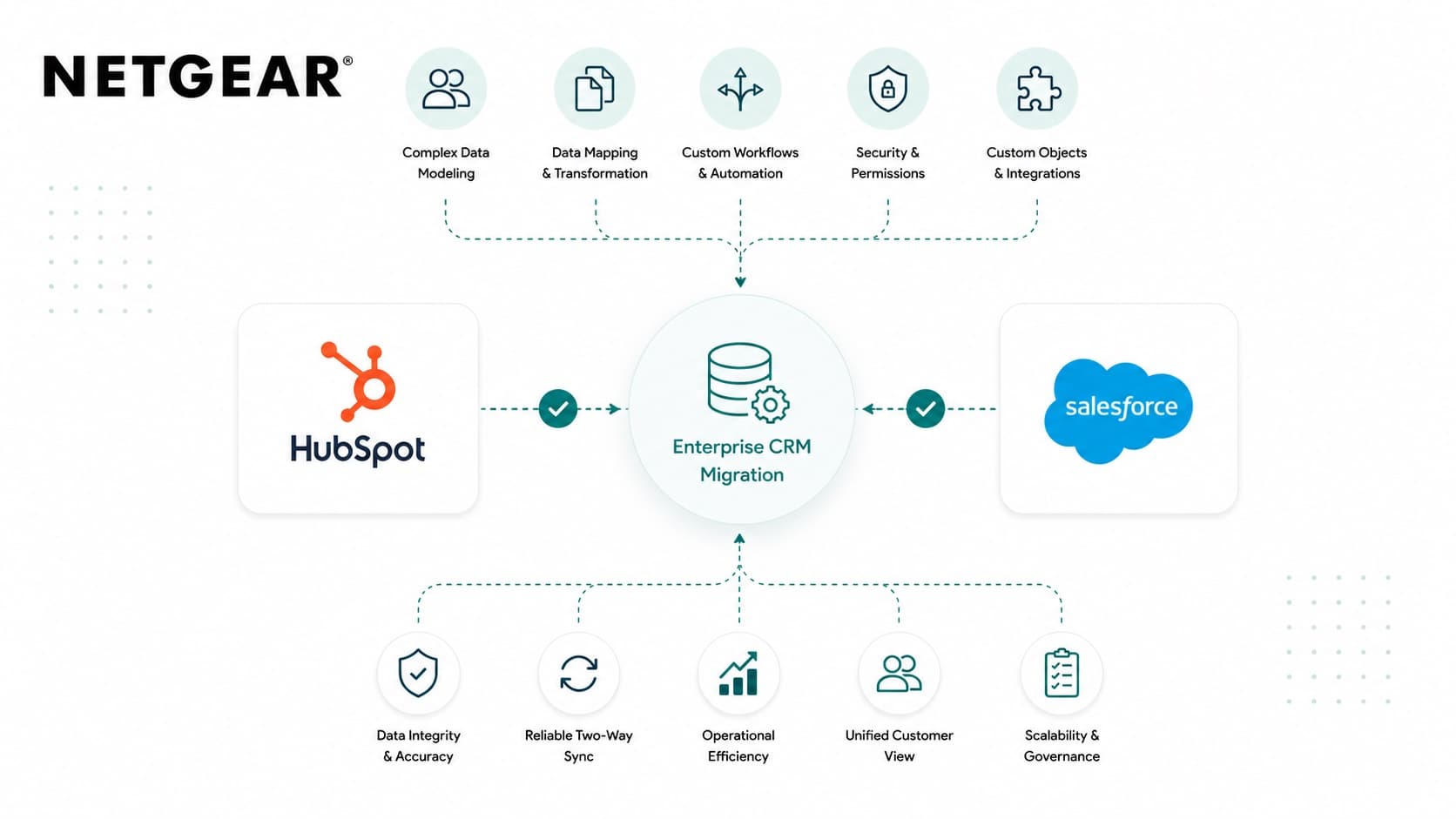 CRM Integrations
NETGEAR · 2026
NETGEAR stabilizes HubSpot-Salesforce sync in 20 working days
1Memail opt-out records migrated
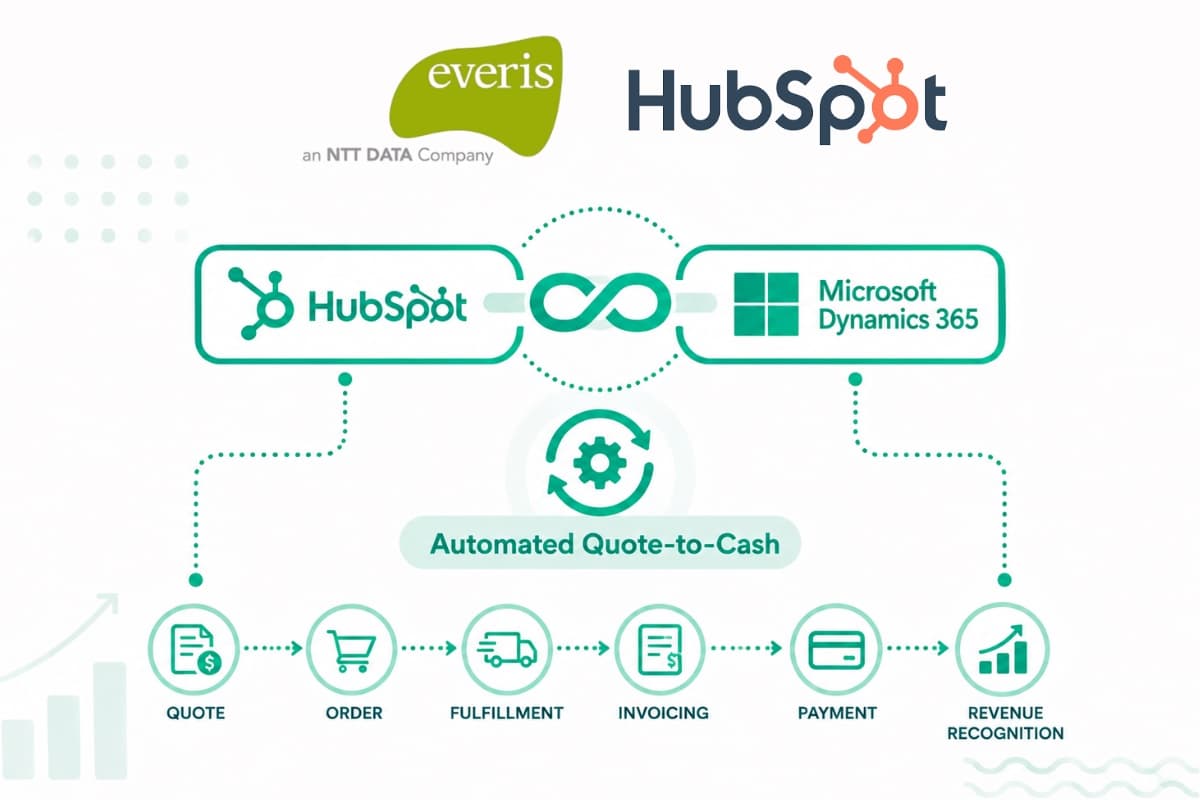 CRM Integrations
Everis · 2026
Everis automates quote-to-cash across HubSpot and Dynamics 365
2enterprise systems connected
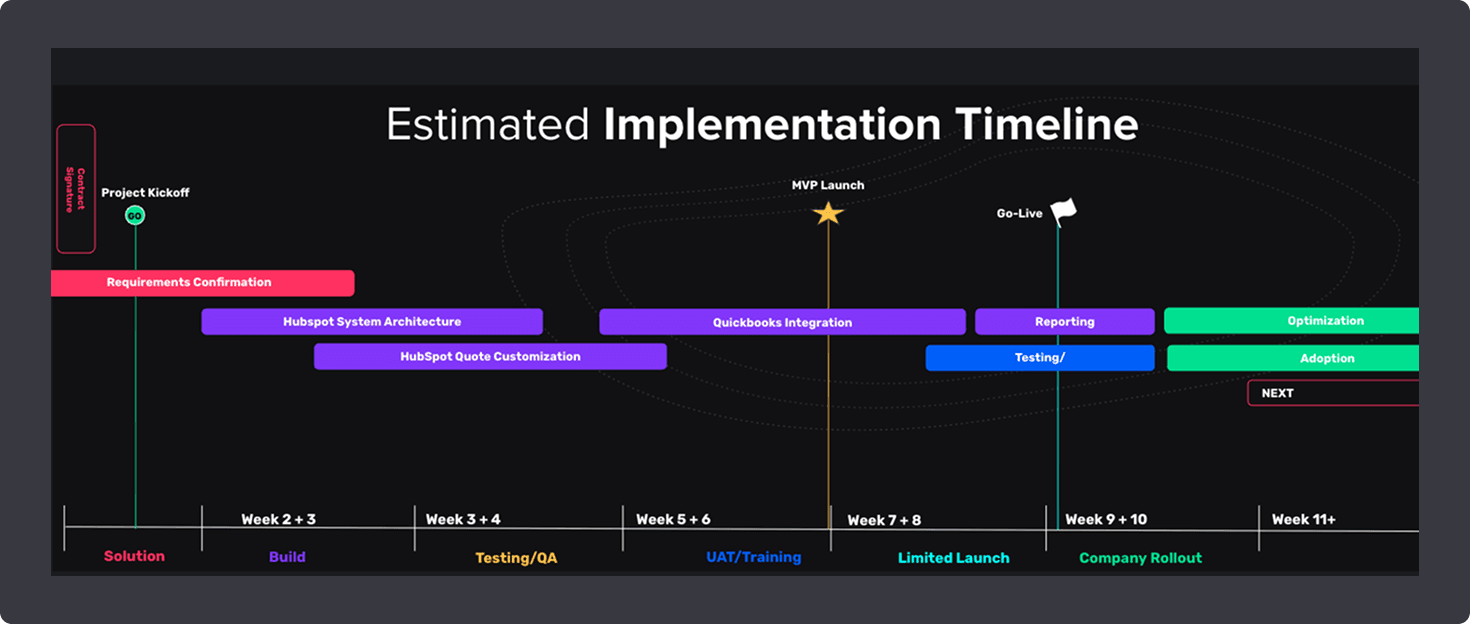 CRM Integrations
HappyCo · 2026
Migrated HappyCo from Pardot to HubSpot and unified it with Salesforce
120+Pardot marketing assets rebuilt and standardized in HubSpot
[ Next step ]
Want this kind of result? Let's scope it.
contact@nexsumlabs.tech — we reply within one business dayNext case study — Aflac