
01
Composable architecture
Frontend and commerce services composed along clean contracts.
[ Platform service ]
Composable commerce storefronts that pair a fast frontend with platform APIs, BigCommerce Catalyst or Hydrogen, edge caching, and flexible content operations.
[ What you get ]
[ How it works ]
[ Capabilities ]
The platform and discipline surface we work across — what an engagement can cover when the scope calls for it.
Frontend and commerce services composed along clean contracts.
The platform reference stacks used where they fit, not cargo-culted.
API-driven checkout with tax, shipping, and failure states handled.
Cache strategies that keep product pages fast and fresh.
Content and commerce data modeled so editors do not duplicate work.
Headless search wired to the catalog and the merchandising rules.
Editorial preview flows that survive the decoupling.
API error tracking and performance monitoring on the storefront.
[ Field notes ]
[ Common questions ]
Composable commerce pairs a custom frontend with platform APIs following MACH principles. Microservices, API-first, Cloud-native, and Headless structure keep each layer independent.
GraphQL APIs such as the Shopify Storefront API or commercetools APIs feed products and cart into the frontend. The frontend architecture is decoupled from the commerce engine.
Cart and checkout are wired through the carts API and order tooling. Draft orders, purchase options, and bundles are supported through the same API layer.
Edge delivery pushes storefront responses close to visitors for fast performance. The deployment pipeline includes previews so changes are reviewed before going live.
No. Headless works with many commerce engines, including Shopify, commercetools, and Hydrogen builds. The architecture is chosen to fit the team's frontend and content operations.
[ Industry examples ]
Industry case studies in this practice area — the problem, the build, and the results, credited to the agency that delivered each one.
 Ecommerce
Cutler and Gross · 2026
+29%ranking keywords
 Ecommerce
FutureYou Cambridge · 2025
30,000+subscribers migrated to Recharge
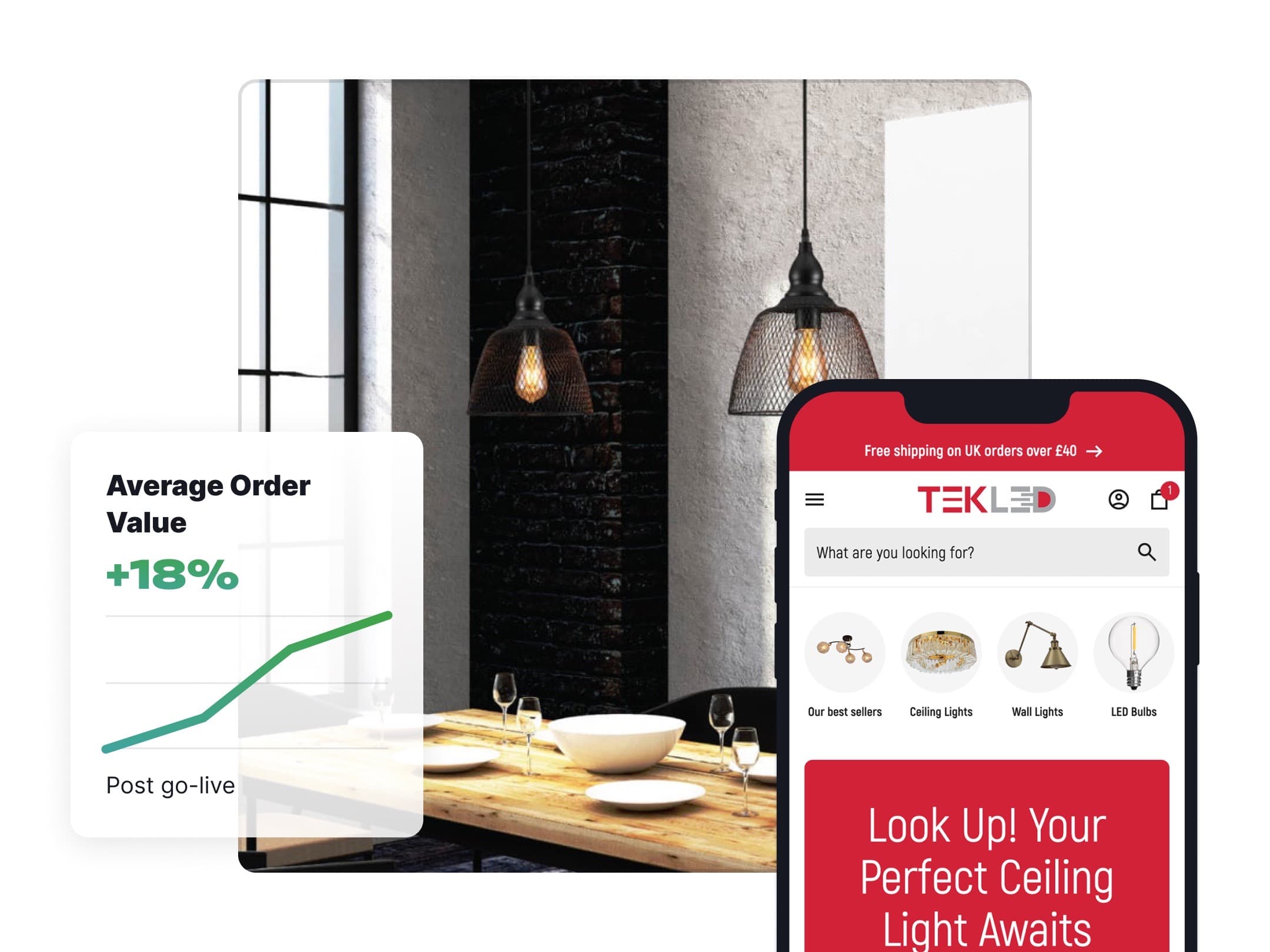 Ecommerce
TEKLED · 2025
+18%average order value
[ Sibling platforms ]
Shopify storefronts using Liquid, custom sections, integrations, and conversion-focused shopping journeys.
Flexible WooCommerce stores with block-based cart and checkout, Store API integrations, payment setup, and performance work for growing catalogs.
Wix Ecommerce stores with mobile-first merchandising, catalog-version awareness, payment setup, and connected operations.
BigCommerce builds for brands that need flexible catalog controls, B2B capability, Catalyst or Stencil storefronts, and connected commerce operations.
Adobe Commerce and Magento work across complex catalogs, custom pricing, GraphQL, integrations, and enterprise operational requirements.
Polished Squarespace Commerce stores with hosted checkout, Commerce API awareness, focused product ranges, and a straightforward editor experience.
Brand-led Webflow Ecommerce experiences using structured product data, the Data API, and a hosted Stripe-powered checkout journey.
[ Field guides ]
What headless commerce actually costs in engineering, checkout control, caching, and operations, and the signals that a good theme is still the better answer.
A migration plan that inventories URLs, maps redirects, QA-tests rendering, phases the cutover, and checks indexes after launch so rankings survive.
[ Next step ]
Back to Ecommerce