
01
React Native New Architecture
Fabric and TurboModule-era patterns where the runtime supports them.
[ Platform service ]
React Native applications using the New Architecture where appropriate, sharing a maintainable codebase while still delivering platform-appropriate experiences.
[ What you get ]
[ How it works ]
[ Capabilities ]
The platform and discipline surface we work across — what an engagement can cover when the scope calls for it.
Fabric and TurboModule-era patterns where the runtime supports them.
Managed builds, updates, and config plugins used deliberately.
Stack and tab navigation with deep-linking handled.
Swift and Kotlin bridges when JavaScript cannot reach far enough.
Local persistence and sync strategy for real networks.
Device permissions and notification flows on both platforms.
Update channels that ship fixes without store review.
Build pipelines and store submission automated.
List virtualization, startup time, and bridge-traffic discipline.
[ Field notes ]
[ Common questions ]
The cross-platform UI and app logic live in one React Native codebase that runs on both iOS and Android. Platform-appropriate experiences are preserved through conditional behavior and native integrations where needed.
Native integrations cover features that need deep platform access beyond shared React Native components. New Architecture boundaries such as TurboModules and JSI are preferred for current work, while legacy bridge dependencies are isolated and documented when they cannot yet be replaced.
Yes, Expo tooling is used where it speeds up the workflow. It sits alongside the React Native codebase and the release pipeline rather than replacing platform-specific work.
A release pipeline with CI/CD prepares builds for app store submission on iOS and Android. Push notifications are handled on APNs and FCM so both platforms are covered.
Performance profiling and testing run against the shared codebase on each platform. Because the code is shared, performance work benefits both store builds at once.
[ Industry examples ]
Industry case studies in this practice area — the problem, the build, and the results, credited to the agency that delivered each one.
 Mobile Apps
Six Flags · 2026
+3.3Mmonthly users
 Mobile Apps
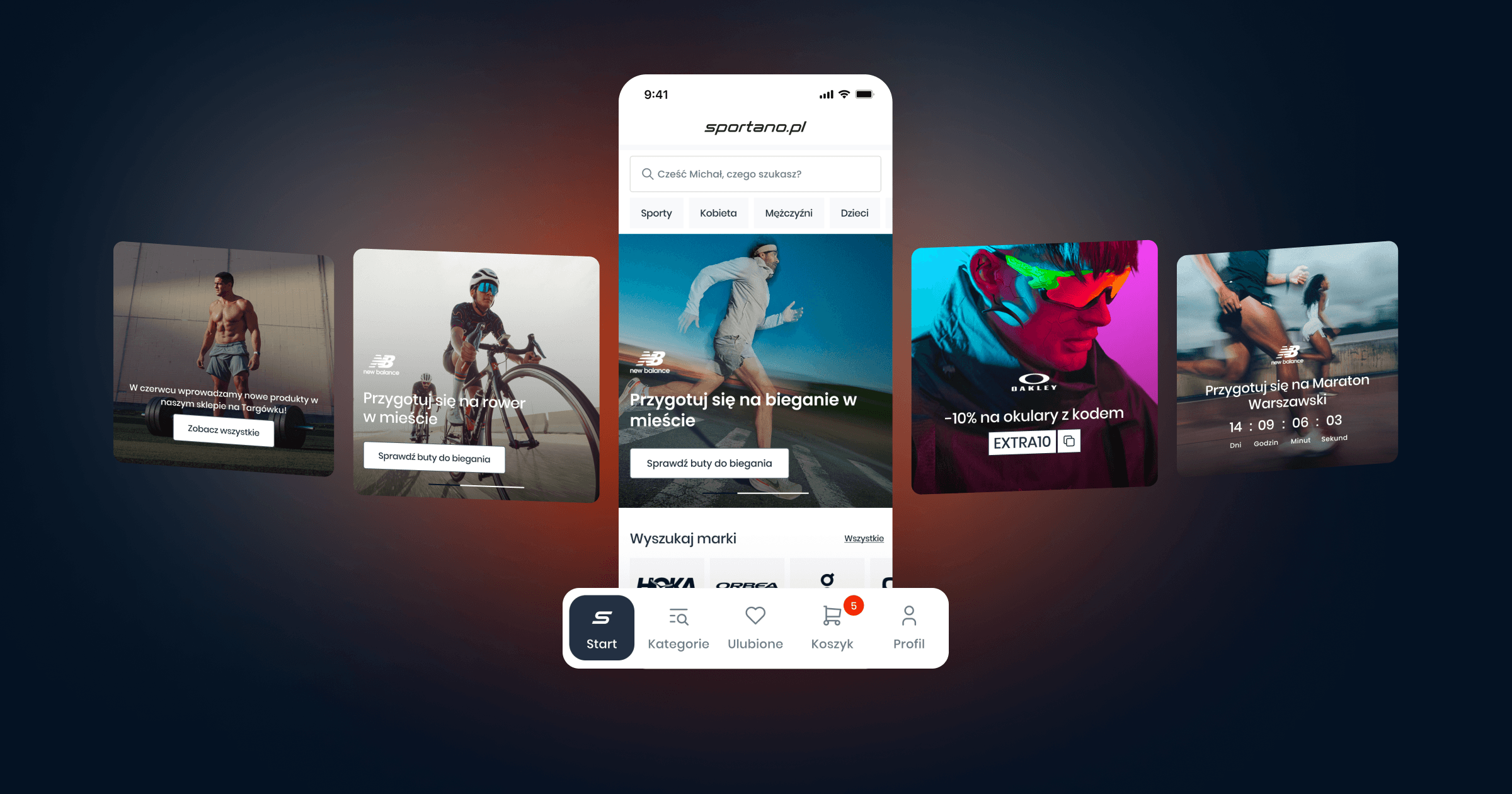
Sportano · 2025
5kdownloads in week one
 Mobile Apps
TUI Poland · 2024
1M+downloads on Google Play
[ Sibling platforms ]
Native iPhone and iPad applications built with Swift and SwiftUI for App Store-ready quality and performance.
Native Android applications built with Kotlin and Jetpack Compose for the device and performance realities of the platform.
Flutter apps with a unified interface system, performant interactions, and dependable iOS and Android delivery.
[ Field guides ]
Post-launch mobile work is predictable: OS releases, SDK deprecations, crashes, and store policy changes all arrive on a schedule.
Performance, team skills, code sharing, and long-term maintenance matter more than framework marketing when choosing a mobile stack.
[ Next step ]
Back to Mobile Apps